

For decades, Campagnolo delivered what no other cycling brand could: tactile precision, visual elegance, and Italian craftsmanship. This combination elevated simple bike components into timeless pieces of art. “Campy” ruled the cycling brand hierarchy for decades.
Shifting gears on a mechanical Campagnolo groupset was — and is — a special kind of magic. A miniscule moment of elegance. A pleasure unmatched by its competitors, enjoyed and reflected on again and again by its rider.
Pleasure as a performance parameter is cycling at its most soulful.
And yet today, the company in Vicenza is laying off nearly half its workforce. The decline didn’t happen overnight, and it wasn’t caused by a single misstep. It was the result of a deeper strategic misalignment — a loss of identity at the very moment Campagnolo most needed to be itself.
This won’t be a eulogy. It’s a reflection on what Campagnolo could have become — and why that still matters for the future of cycling, and hopefully Campagnolo itself.
The Warning Signs Were There
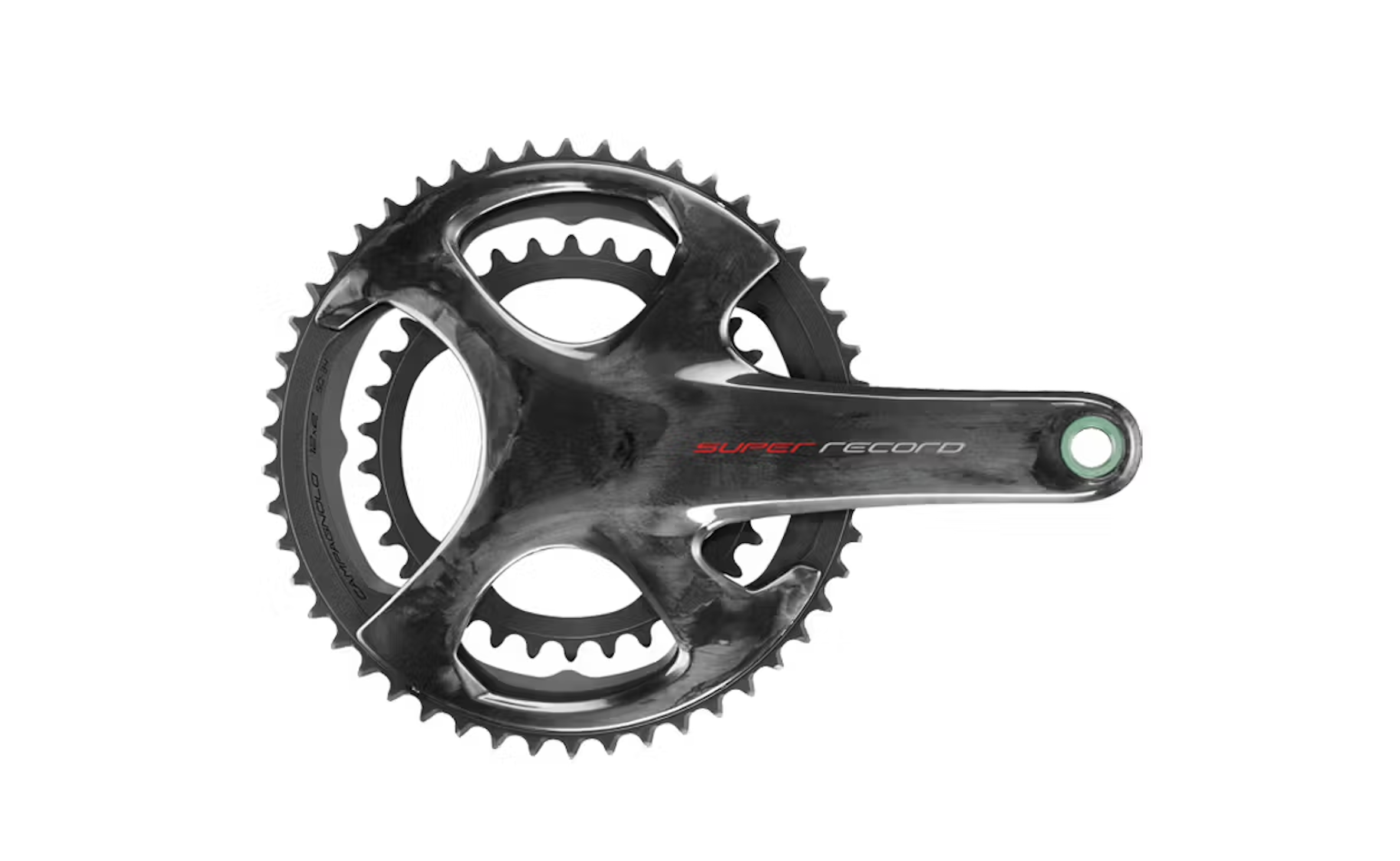
Some might have seen this coming over ten years ago with the redesign of the Super Record cranks.
When Campagnolo cranks suddenly looked like Shimano cranks — solid, somewhat generic and stripped of their sculptural character— was a sign the company might no longer be leading with identity, but following out of fear.
Then five or six years ago, Campagnolo tried to reassert relevance by entering the gravel battle that SRAM and Shimano were already winning.
“These Numbers go to Thirteen”
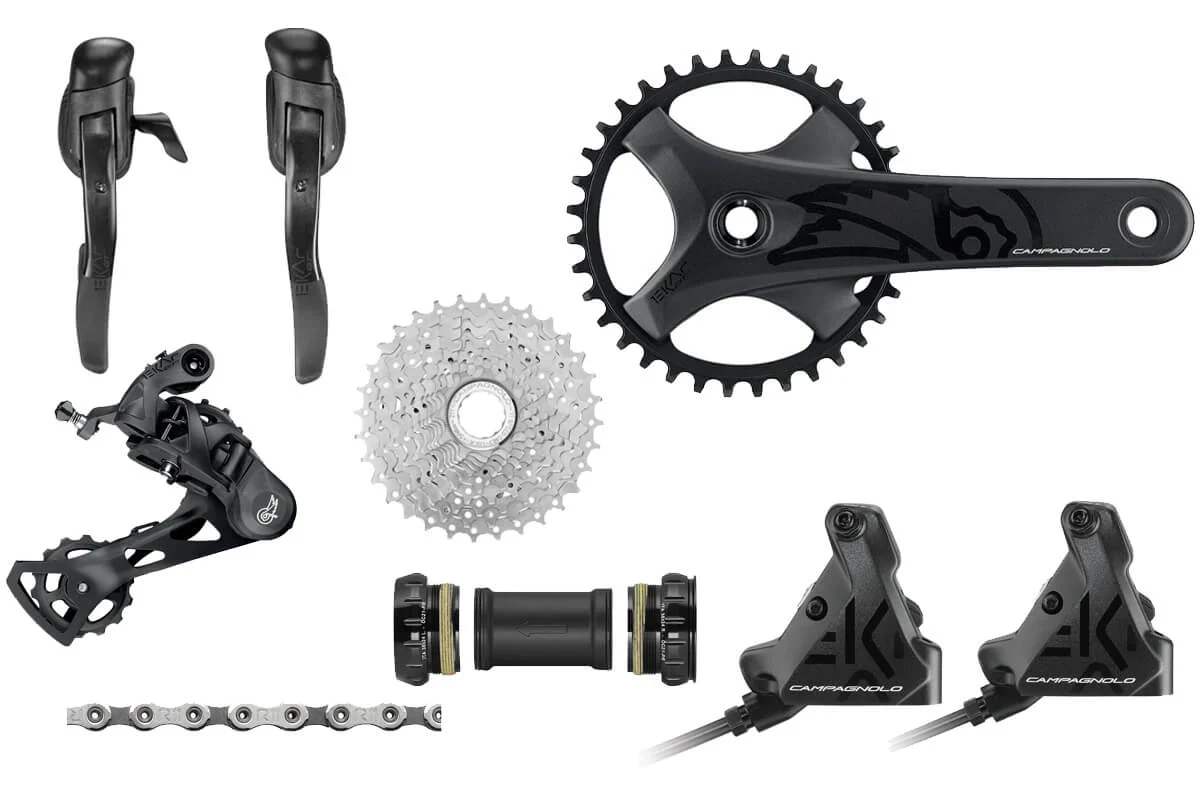
So along came Ekar, late and off-tone. While not all bad, it was rightly criticised for its inelegant, matt-aluminium cassette and for foregoing an electronic version. It felt like a prototype. And it might have echoed Campy, but just barely. Campy, however, is supposed to shake the earth when it drops.
Unsurprisingly, it received a lukewarm reception. Not a disaster, but not the renaissance the brand needed. At least the price point made sense.
And the introduction of 13 gears? Unneeded complexity.
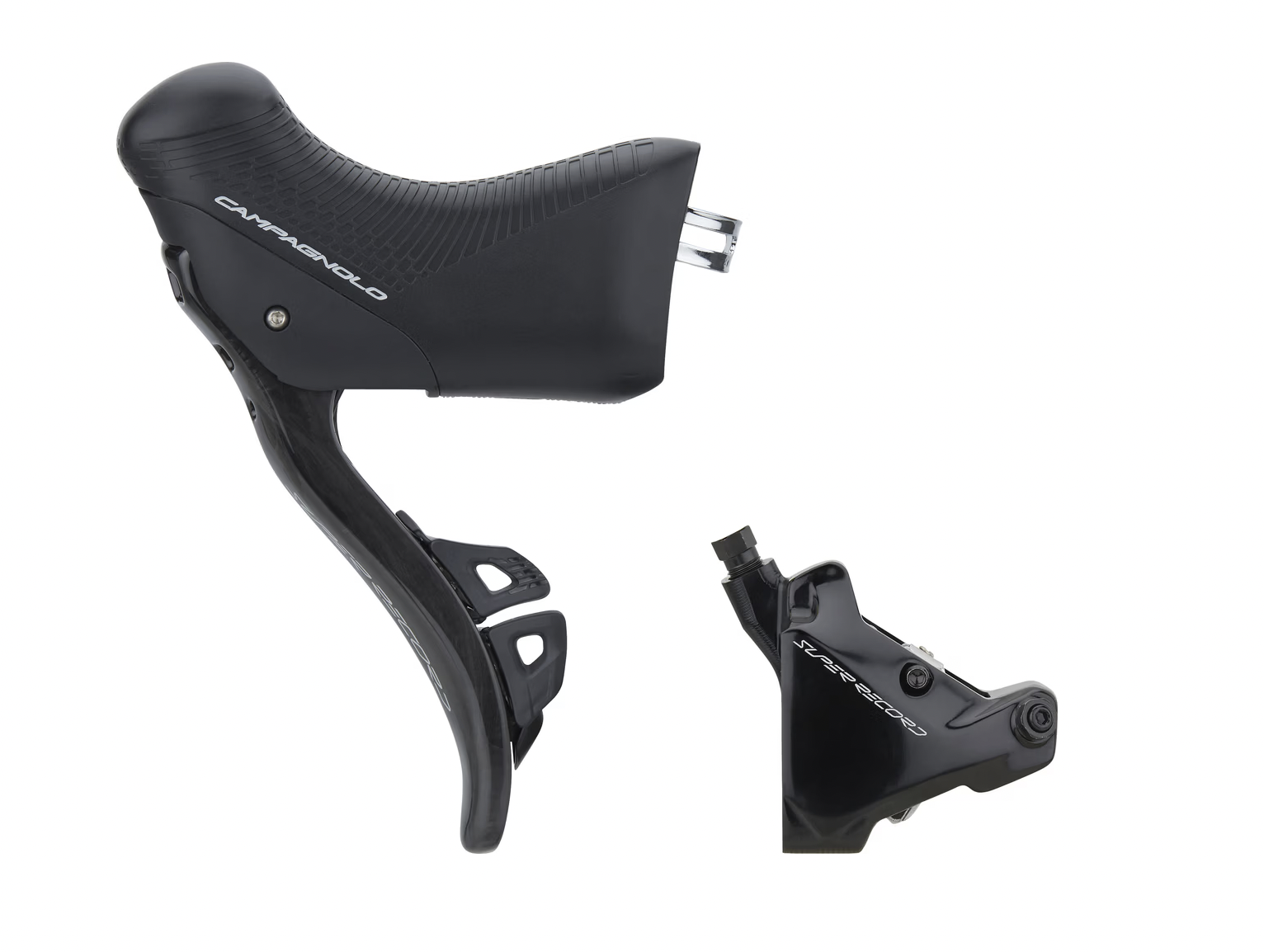
Then, in 2023, the launch of Super Record Wireless marked what should have been a turning point — instead, it proved to be a dead end.
Ditching the thumb shifter alone was a shock to Campy loyalists, but relocating it to join its twin on the brake lever showed a deeper disconnect: a misjudgement of human ergonomics, not to mention Campagnolo tradition.
Just one year later, they reversed course, restoring the classic layout — a move that signaled uncertainty, not leadership. And with it, came a price hike.
In these moments and others, Campagnolo is not being judged against SRAM or Shimano — but against its own mythology. And mythology obeys different rules. It demands conviction, not compromise.
This is where the tragedy became clear: Campagnolo abandoned the one thing it uniquely offered: Truth.
Truth defies explanation. Truth simply is.
What Campagnolo Could Have Done
While the rest of the industry turned into a tech showcase — Campagnolo had the opportunity to define an entirely different proposition:
1. Double down on perfection. Not retro, but refined.
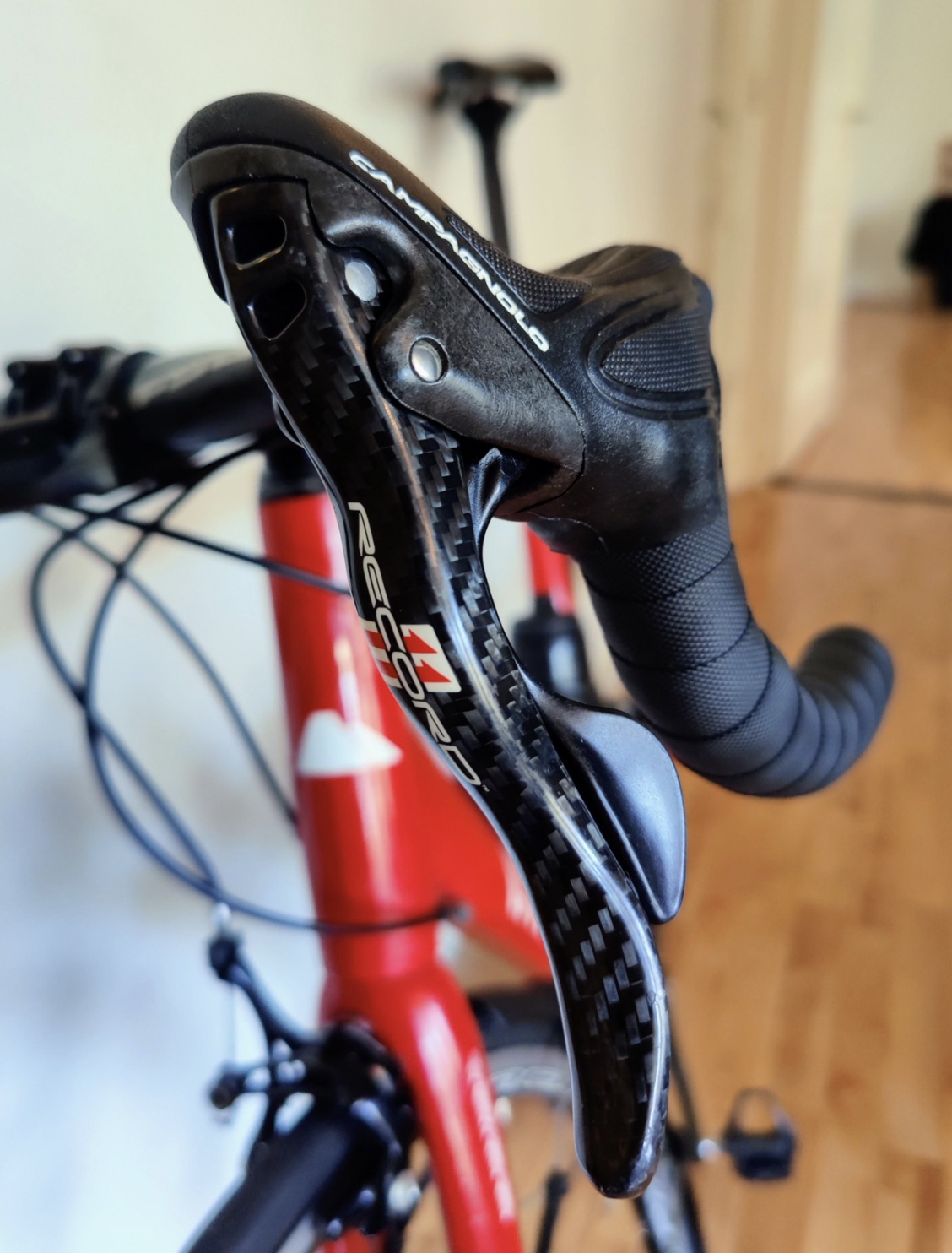
Mechanical Campagnolo shifts beautifully. 11-Speed EPS is legendary. Better than anything on the market. The feel, the ergonomics, the sound — it’s all unmatched. They could have said: “We are the home of excellence in a robotic world.”
A bold, proud counter-narrative.
They could have released a gravel version with Super Record sensibilities.
2. Embrace elegant simplicity
Just as new bikes got heavier, more complex, and weirdly overbuilt, Campagnolo could have positioned itself as the guardian of a more elegant cycling ethos—while still offering EPS and continuing to support rim brakes.
A brand for people who want: light bikes, clean lines, serviceability, tactile riding, longevity, value, and most importantly: beauty.
Not everything needs discs. Not everything needs integration. Not everything needs to look like a space age. But if it does, the rocket better be gorgeous.
3. Hit a sane luxury price point:
Imagine an EPS Super Record at €1,800.
Mechanical Super Record at €1,200.
Mechanical Chorus at €800.
Still premium. Still special. But no longer a rarity reserved for collectors and tech bros. That alone would have built a new generation of loyalists.
4. Become the brand for real riders, not OEMs or pro teams
Campagnolo was never going to win back big bike manufacturers or Tour de France dominance at any time in the near present. But it could win hearts — and wallets — among enthusiasts: randonneurs, climbers, classic-build aficionados, people who ride in winter, or simply riders with taste.
These are the people who actually buy groupsets, not the people who get them issued.
5. Lean into culture, not tech
SRAM sells innovation.
Shimano sells reliability.
Campagnolo could have sold romance, feel, heritage, and meaning. The exact things no spreadsheet-driven competitor can imitate.
There is a Niche — and Campagnolo walked away from it
Right now, core riders are growing tired of the bike industry’s obsession with marginal gains, endless integration, and €10,000 “enthusiast” bikes that weigh more than a 2012 BMC.
There’s a quiet but growing counter-movement.
You see it in older high-end frames being reconsidered.
In rim-brake bikes being brought back out on the street.
In riders embracing mechanical shifting again.
In the desire to escape the tech churn.
In the search for authenticity over optimisation.
Campagnolo could have owned this cultural territory outright — not by keeping up with the competition, but by doing the opposite:
By being itself.
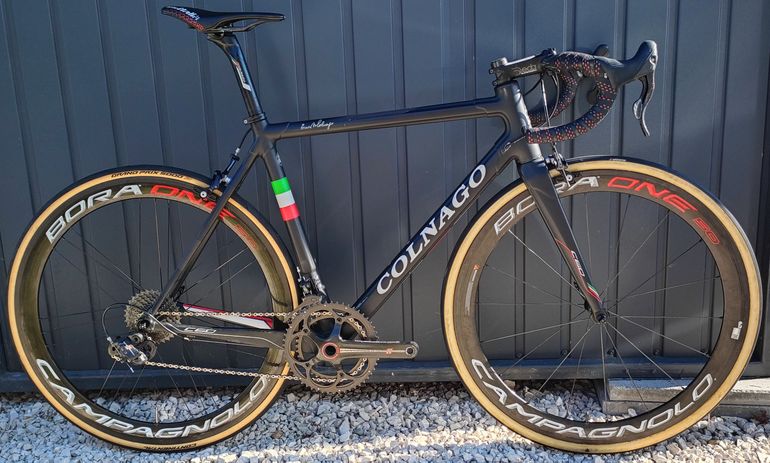
The Real Loss
The saddest part isn’t that Campagnolo failed financially.
It’s that cycling lost a version of Campagnolo:
- A company unashamed of tradition.
- A champion of mechanical tactility and upapologetic beauty.
- A sane, soulful alternative to tech-driven disposability
- A steward of “real cycling”
- The Leica of groupsets — not the Apple imitation it tried to become
In trying to win a race defined by others, Campagnolo walked away from the one race it could have won.
Maybe It’s Not Too Late
Every crisis resets the landscape.
Every contraction makes room for new ideas.
Every wave of tech generates a counter-culture.
If there’s a future Campagnolo worth believing in, it’s the one that embraces the truth:
Not everyone wants more gears.
Not everyone wants electronics.
Not everyone wants innovation for its own sake.
But everyone wants a bike that feels alive.
Campagnolo once knew how to make bikes feel alive.
It just forgot that this was enough.
At Crank! Communication, we think about brands like this all the time. If you’d like fresh eyes on yours — strategic, honest, and full of ideas — say hello.